

Brick Oven Cooking Techniques
Using different brick oven cooking techniques makes your brick oven capable of an almost endless variety of cooking styles. Let’s start with a couple of general pointers:
- In almost every case, you should first bring your wood fired oven fully up to heat, then move the fire and coals to the side. Next, let the oven temperature reduce to the correct range for your chosen cooking style.
- How to cook pizza in a brick oven depends on how much cooking you will be doing, and how long you want your brick oven to hold its heat. It also depends on how long you want your brick oven to hold its heat. Remember — you can only take out heat from the oven that you put in. For example, if you are going to be cooking a lot of pizza for a large party, baking several loaves of bread, or a large roast, then fire your pizza oven longer. If you are only making pizza for the family for a mid-week meal, you can fire your brick oven for a shorter time — typically, only until the dome goes white.
CLICK HERE for an expanded Cooking Styles Reference Guide, with recommended temperatures, food types, fire sizes, helpful tools, and other tips!
Overview of how to cook pizza in brick ovens:
Fire-in-the-Oven Cooking (hottest temperatures)
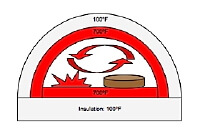
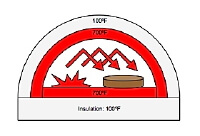
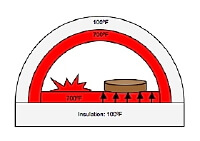
Fire-in-the-oven cooking (650ºF and up) is used for baking pizza, pizza-like flatbreads and certain types of appetizers, all of which cook in just a couple of minutes. The goal with this style is to completely fill the floor and dome with heat, build up a large-sized bed of coals, and maintain a large fire, where the flame reaches to the top of the dome. As seen in the diagram, heat is transferred to the food in three ways: Convection (cool air enters the oven mouth, heats, and exits through the chimney,) reflection (heat from the flames reflects off of the dome and onto the food,) and conduction (heat stored in the cooking floor is released directly into the food.)
There are two ways to know that a pizza oven is ready to cook pizza. The first is when the oven dome itself has gone clear and no black soot is visible. At this point, you should move the fire to one side, while continuing to keep a large fire going, with the flame reaching the middle of the brick oven. Second, if you are using an infrared thermometer, the floor should read approximately 650ºF-700ºF. Pizzas are baked right on the floor next to the fire. Leave the pizza oven completely open, and add wood every 15-20 minutes to maintain a large flame.
Brick Oven Cooking Techniques: Roasting (higher heat than Baking)
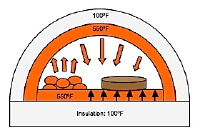
Roasting temperatures (between 600ºF – 450ºF) are perfect for searing meats, and browning vegetables or casseroles before covering them with a lid or with a liquid. These temperatures also work well for cooking food thoroughly, but not letting the outside burn or over-brown. This temperature range is lower than for fire-in-the-oven cooking, but higher than for traditional baking.
In order to roast, first bring your oven up to pizza temperatures (700ºF), then allow the temperature to drop and the fire to burn down, but not out. Push the coals to one side. The fully-fired oven, combined with a low fire, enables you to sear and brown dishes, and then continue cooking the dish for a longer period of time as the oven temperature slowly drops.
Your oven should have no visible black on the dome, a medium sized bed of coals, and a small, 2″-4″ high flame. The door may be left off for short roasting times (under one hour,) or positioned inside the arch opening to help regulate heat for multiple hours of roasting. Add small pieces of wood as needed to maintain your desired temperature. More on Retained Heat Cooking >>
Brick Oven Cooking Techniques: Baking (conventional oven temperatures)
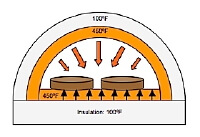
Baking (500ºF and down) is used for baking bread, desserts, smaller roast meats, beans and legumes, and pasta dishes at conventional oven temperatures. After fully firing your oven, carefully rake out the hot coals and brush out the oven. If you wish, you can swab the deck with a damp, but not wet, towel. Your oven can now cook gently and consistently with the heat retained in the oven dome and floor as the temperature falls.
Using this type of cooking, you can bake either one fully-loaded batch of bread, or multiple batches of different types of bread in smaller quantities. Close the door tightly against the oven opening to hold in heat and steam.
Brick Oven Cooking Techniques: Grilling (over coals)
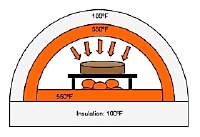
Your brick oven makes a great grill. By raking a layer of hot coals across the cooking floor at the front of your wood fired oven, and sliding a free-standing cast iron Tuscan Grill into the oven, you can enjoy a style of grilling that sets seared grill marks and seals in moisture — creating food that is crisp, but not dried out. With heat from the grill itself, from the coals, and radiating from the oven dome above, the brick oven makes a great BBQ.
You can also try experimenting with various pots and pans. For example, a pre-heated cast iron grill pan makes nice sear marks; terracotta and steel pans give roasted potatoes different textures and flavors. More Grilling Techniques >>
Printable Cooking Styles Reference Guide (expanded chart)Learn More Brick Oven Cooking Techniques
Check out these related articles about Brick Oven Cooking Techniques.
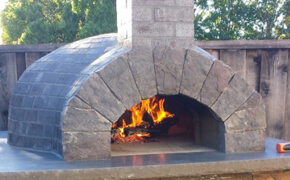
Brick Oven Cooking
Return to Brick Oven Cooking overview page and experience the joys of wood fired cooking.
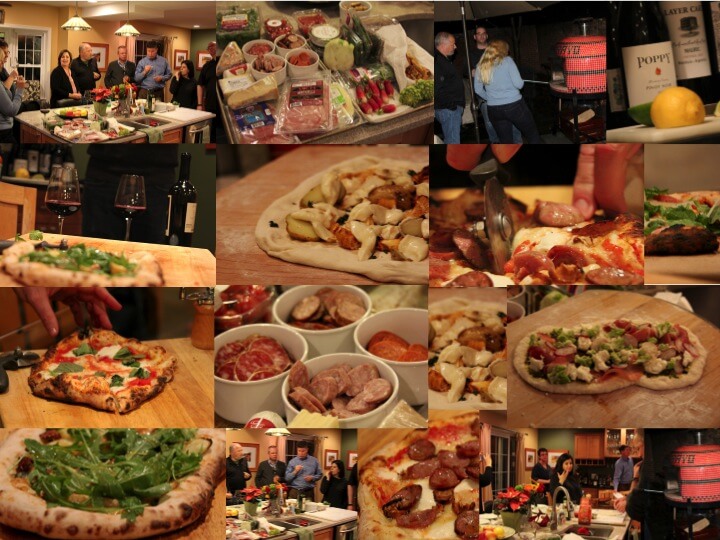
Community Cookbook
Over 200 brick oven recipes from professional chefs and guests. Our cookbook has both videos and printable recipes for you to try.
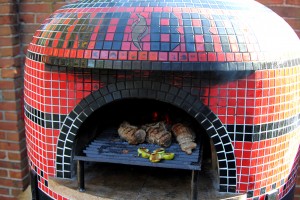
Grilling Basics
Forno Bravo brick ovens are for more than pizza! Learn about grilling techniques here.
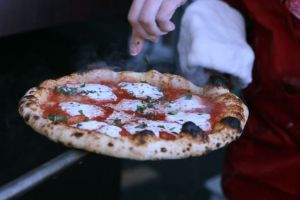
Using Pizza Peels
Should you use a wooden pizza peel to build your pizza on and then set it in your oven, or should you make it on a flat surface, and use a metal peel to place it in your oven?
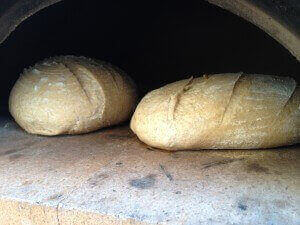
Steam in a Brick Oven
Creating steam in a regular oven or a brick oven is what separates just a boring loaf of white bread shaped into a skinny oval from a real baguette.
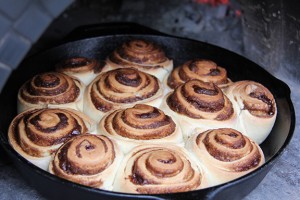
Retained Heat Cooking
Retained heat cooking uses heat stored in your oven dome and floor to bake and roast at lower, more traditional temperatures.
Ready to get a Forno Bravo?
If you have seen enough and are ready to buy, these links will help.
Selection Wizard
The Forno Bravo Selection Wizard is designed to help you decide which pizza oven is right for your house, garden, or restaurant. The Selection Wizard will walk you through the selection process, with questions covering such topics as — who will be doing the installation, available space, the types of foods you will be cooking, how many you feed, and your budget considerations.
Home Pizza Oven Overview Page
Whether you are looking for a do-it-yourself brick oven, or a modular pizza oven kit for your outdoor kitchen, we have a wood or gas fired pizza oven for your family. Forno Bravo offers the most diverse refractory, stainless steel, and brick oven products available in the market.
Made in the USA in our facilities in Colorado and California.
Commercial Pizza Oven Overview
Pizza ovens can be the center of your restaurant or a supplement to your menu plans. Forno Bravo commercial pizza ovens come in a variety of sizes, assembled styles, or kits/knock-down models to accommodate your space and vision. They can be custom branded to match your company’s look and have both wood or gas fired options.
UL certified in the US and Canada for indoor and outdoor installation.
Browse The Forno Bravo Store
With the widest selection of home and commercial pizza ovens on the market, you can purchase online or contact us directly.